Source Organic Vegan PQQ Capsules for Brain Heart and Immunity
Find 30 verified suppliers offering organic vegan PQQ capsules tailored for brain health, heart support, and immunity enhancement. Compare specifications, certifications, and pricing to select the right manufacturer for your needs; compare the available evidence and request quotations based on your requirements.
Key considerations
Products List








Comprehensive Sourcing Guide
Organic Vegan PQQ Capsules Sourcing Guide
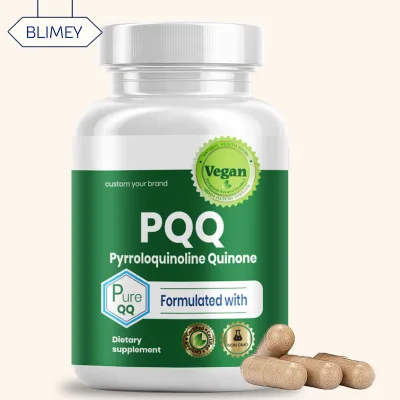
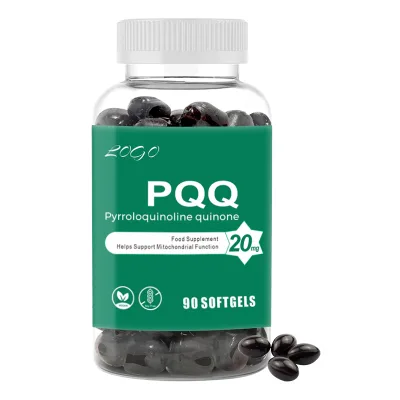
Procuring organic vegan PQQ capsules requires distinguishing between general dietary supplements and specific functional formulations designed for brain and heart health. Buyers must verify that the "Organic" and "Vegan" attributes are explicitly stated on product listings, as some suppliers offer standard PQQ capsules that may contain non-vegan binders or lack organic certification. The observed market data indicates a wide range of customization options, including OEM/ODM models, which allows buyers to tailor the product to specific brand requirements while ensuring the core ingredient remains PQQ.
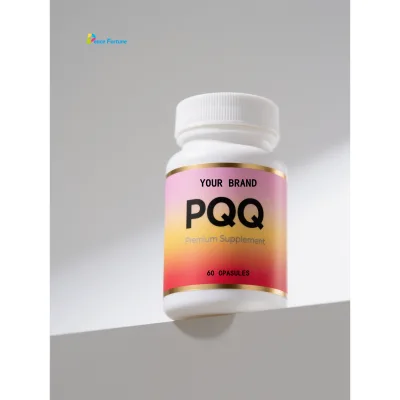
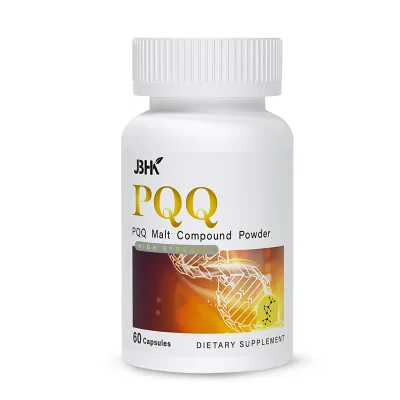
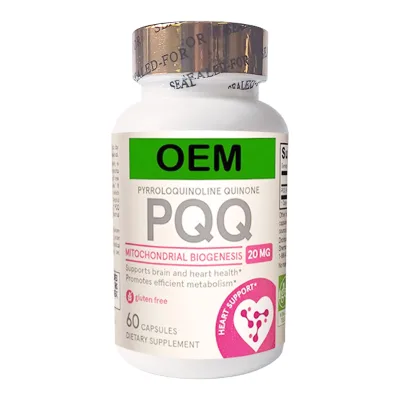
Sourcing decisions should also account for the diverse packaging formats observed, ranging from bottles to cartons and boxes, which impact logistics and retail presentation. While some listings specify a standard of 60 capsules per bottle, others offer customizable counts like 90 or 120 per box, necessitating clear communication with suppliers regarding final unit specifications. Buyers must confirm that the "Food Level" grade and "Gluten-Free" dietary specialities align with their target market's regulatory expectations before committing to a bulk order.
Product Scope and Observed Listing Signals
The product scope for organic vegan PQQ capsules typically centers on functional benefits such as antioxidant support and immunity improvement, with specific listings highlighting applications for brain and heart health. Buyers should note that while many products are marketed as "Low-Fat" and "Sugar-Free," the presence of these features does not guarantee the product is organic unless explicitly certified. The observed listings show a mix of capsule and tablet forms, requiring buyers to verify the physical form factor matches their formulation strategy, as some suppliers may default to tablet production unless a capsule request is made.
Listing signals often include specific dosage instructions, such as taking two capsules once daily, which serves as a proxy for the intended potency and serving size. However, buyers must be cautious of inconsistent product names, where some listings refer to "PQQ CoQ10 capsules" while others specify "PQQ Capsules" alone, potentially indicating a blend rather than a single-ingredient product. The availability of logo printing and custom shapes suggests a strong OEM focus, but this customization capability must be balanced against the minimum order quantities that can reach up to 300,000 pieces for certain suppliers.
Technical Specifications to Verify
Technical verification begins with confirming the exact dosage per unit, as observed standards vary between 0.5g per capsule and specific milligram counts like 20mg of PQQ. Buyers must ensure the supplier clearly defines the main ingredient concentration, as the difference between a 20mg capsule and a 0.5g total weight capsule significantly affects the final product's efficacy and cost structure. The shelf-life is consistently observed as 24 months or 2 years, but this duration is contingent upon strict adherence to storage methods, such as keeping the product in a cool, dry place to maintain moisture-proof integrity.
Packaging specifications are equally critical, with observed data showing options for single items, bottles, cartons, and boxes containing 60, 90, or 120 capsules. Buyers need to verify that the "Carton" and "Box" packaging layers are robust enough to protect the moisture-sensitive capsules during international transit. Additionally, the shape of the capsule is listed as customizable, but this requires a detailed technical agreement on mold specifications to ensure the final product meets the desired aesthetic and functional requirements without compromising the seal integrity.
Compliance and Safety Documentation
Compliance verification requires a rigorous review of certification documents, as observed listings frequently cite QS, HACCP, GMP, and ISO standards. Buyers must request current certificates for each of these standards, noting that while some suppliers list all four, others may only provide HACCP and ISO, which could indicate gaps in their Good Manufacturing Practice protocols. The "Food Level" grade mentioned in product attributes is a baseline requirement, but it does not replace the need for third-party testing reports that validate the organic and vegan claims against specific regulatory frameworks.
Safety documentation must also address the "Not Applicable People" category, which explicitly excludes newborns, ensuring the product is marketed and labeled correctly for adults only. Buyers should verify that the supplier provides a Certificate of Analysis (CoA) for every batch to confirm the absence of contaminants and the accuracy of the PQQ content. The "Gluten-Free" dietary specialty requires specific testing protocols to ensure cross-contamination is prevented, and buyers should demand evidence of this testing rather than relying solely on the supplier's self-declaration.
Cost Drivers and Commercial Terms
Cost drivers in this category are heavily influenced by the Minimum Order Quantity (MOQ), which ranges widely from 10 pieces to 300,000 pieces depending on the supplier's capacity and customization level. High MOQs, such as the 300,000-piece threshold observed for certain OEM models, are often tied to the ability to offer lower unit prices and custom branding, whereas lower MOQs may result in significantly higher per-unit costs. Buyers must calculate the total landed cost, including the price range of $0.02 to $10 per unit, while factoring in the expenses associated with custom molds, logo printing, and specialized packaging requirements.
Commercial terms must clearly define the lead time and payment structure, as the observed data does not specify standard lead times, creating a potential risk for supply chain planning. The "Customization: Available" attribute implies that lead times will extend beyond standard production cycles to accommodate design changes and branding. Buyers should negotiate terms that account for the variability in production schedules, ensuring that the supplier can meet delivery deadlines even when the order involves complex specifications like custom shapes or specific organic certifications.
Supplier Qualification and Quality Control
Supplier qualification should prioritize facilities located in verified manufacturing hubs like Guangzhou or Henan Province, as these regions have established infrastructure for dietary supplement production. Buyers must verify the physical location of the factory to ensure it aligns with the "Place of Origin" stated in the product listing, as discrepancies can indicate trading companies rather than direct manufacturers. The presence of multiple certifications like GMP and HACCP is a positive indicator, but buyers should conduct virtual or on-site audits to confirm that these standards are actively maintained in daily operations.
Quality control protocols must be explicitly defined in the contract, covering everything from raw material sourcing to final packaging. Since the product is sensitive to moisture, the supplier's storage methods must be validated to ensure the "Moisture Proof" claim is maintained throughout the production and storage process. Buyers should require a detailed quality control plan that includes in-process checks for capsule weight uniformity and seal integrity, ensuring that the final product meets the specified standard of 60 capsules per bottle or other agreed-upon configurations.
Long-Term Procurement Checks
Long-term procurement success depends on establishing a robust relationship with suppliers who can consistently deliver on the "Organic" and "Vegan" claims over multiple production cycles. Buyers should implement a schedule for periodic re-verification of certifications, as regulatory requirements and supplier status can change, potentially invalidating previously held QS, HACCP, or ISO credentials. Regular audits of the supply chain are essential to ensure that the "Main Ingredient" remains PQQ and that no unauthorized substitutions occur, which could compromise the product's efficacy and brand reputation.
Continuous monitoring of market trends and regulatory updates is necessary to adapt the product specification as consumer preferences evolve. Buyers should maintain open communication channels with suppliers to discuss potential improvements in the "Main Function" profile, such as enhancing antioxidant properties or adjusting the dosage for better health outcomes. Establishing a clear feedback loop for product performance and customer complaints will help identify any quality issues early, allowing for corrective actions before they impact the broader market or lead to regulatory non-compliance.
FAQs
What are the main health benefits of PQQ capsules?
PQQ capsules primarily support brain and heart health. They also function as antioxidants to improve immunity. These vegan capsules are designed for adults seeking natural wellness support. The product is sugar-free and low-fat, making it suitable for various dietary needs. Regular intake helps maintain cellular energy and overall vitality.
How should organic vegan PQQ capsules be stored?
Store the capsules in a cool and dry place to maintain potency. The packaging is moisture-proof to protect the contents from humidity. Keep the bottle sealed when not in use. This storage method ensures the product remains effective throughout its two-year shelf life. Avoid exposure to direct sunlight or excessive heat.
Can buyers customize the packaging for PQQ capsules?
Yes, customization is available for bulk orders. Buyers can choose specific bottle and carton packaging options. Logo printing services are provided for brand identification. The standard specification allows for 60 capsules per bottle. Custom shapes and labels can be arranged to meet unique marketing requirements.
What certifications do these PQQ capsules hold?
The capsules hold QS, HACCP, GMP, and ISO certifications. These standards ensure quality and safety in production. The product is also gluten-free and food-grade. Such certifications verify that the manufacturing process meets international requirements. This makes the product suitable for global distribution and compliance.
What is the recommended dosage for PQQ capsules?
The recommended dosage is two capsules once a day. This amount provides optimal support for brain and heart health. The product is intended for adult use only. Newborns and infants should not consume these capsules. Adhering to the daily dosage ensures consistent intake of the active ingredients.